


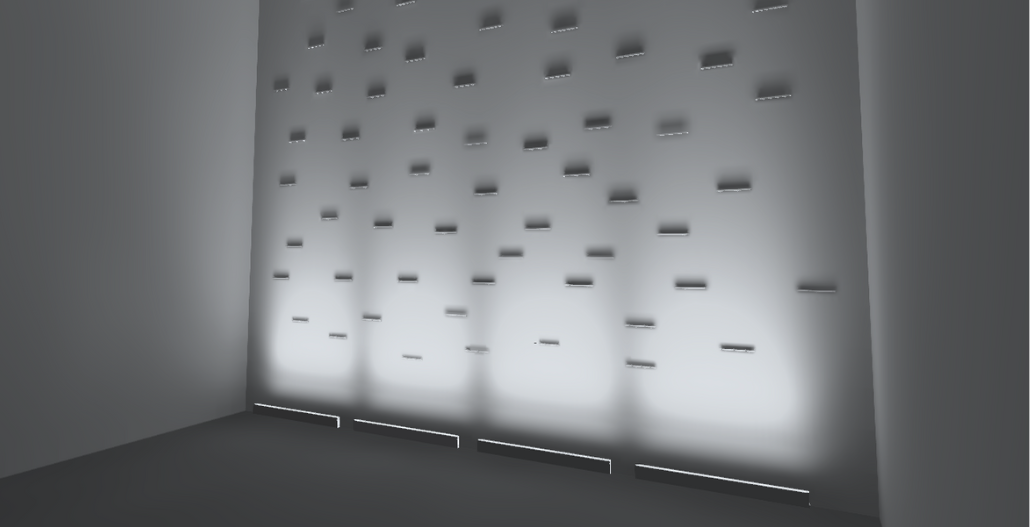

Two lighting techniques that are often confused for each other but serve different purposes are wall grazing and wall washing. While both involve illuminating walls, their effects and applications vary significantly—especially when choosing the right wall washer fixture for your space.
Wall Washing
The goal of wall washing is to create an even, soft illumination across a surface, minimizing shadows and highlighting the wall’s color and design without emphasizing texture. To achieve this effect:
- The light fixture is placed farther from the wall, allowing for uniform coverage.
- A wider beam angle is used (typically around 45°).
- The fixture is usually aimed more horizontally to cast light across a broad surface.
Wall Gazing
In contrast, wall grazing is designed to enhance the texture of a wall by creating contrast between light and shadow. This technique is ideal for walls with brick, stone, or wood where the natural texture is a key feature. To achieve this effect:
- The light fixture is placed closer to the wall to emphasize depth.
- A narrower beam angle is used (typically 15-30°).
- The fixture is typically aimed vertically, directing light up or down at a steep angle.
Why Choose Wall Washing?
If you need soft, uniform lighting across a surface, wall washing is the ideal technique. It works best for:
- Smoothing Imperfections – Helps eliminate harsh shadows and is great for hiding minor flaws in a wall.
- Highlighting Large, Flat Surfaces – Ensures even illumination across painted or decorative walls.
- Creating a Clean, Modern Look – Perfect for commercial settings, galleries, and contemporary spaces.
- Illuminating Sign Faces & Furniture – Useful for lighting signage or built-in furniture without emphasizing texture.

Why Choose Wall Grazing?
Wall grazing is an excellent choice when you want to showcase the texture and depth of a surface. Here’s why it stands out:
- Enhances Texture – Perfect for surfaces like brick, stone, and wood, adding depth and visual interest.
- Creates Drama & Contrast – The interplay of light and shadow adds a dynamic, high-end look.
- Highlights Architectural Features – Great for accent walls, columns, and unique wall finishes.
- Adds Depth to a Space – Makes rooms feel more expansive and visually striking.
- Elevates Interior Design – Frequently used in luxury homes, hotels, and commercial spaces to achieve a refined aesthetic.
If you want your walls to do more than just blend in, wall grazing is the way to go.

Wall Washing vs. Wall Grazing in Summary:
| Feature | Wall Washing | Wall Grazing |
|---|---|---|
| Purpose | Even illumination | Highlight texture |
| Best for | Smooth, flat walls | Textured surfaces (brick, stone, wood) |
| Beam Angle | Wide/45° (wide) | Narrow/15-30° (narrow) |
| Fixture Placement | Further from the wall | Close to the wall |
| Aiming Orientation | More horizontal - Perpendicular to wall | More vertical - parallel to wall |
Wall Washing & Grazing: Dos and Don’ts
Dos:
- Follow Electrical Codes – Ensure all installations comply with the National Electric Code (NEC) and local regulations. If unsure, consult a licensed electrician.
- Prioritize Safety: Turn off power at the breaker before installation. Use insulated tools and treat all wiring as live until confirmed safe. Wear proper Personal Protective Equipment (PPE).
- Test Before Installation –Connect your low voltage power to the wall washer and turn it on to visualize its placement. Move the light around and adjust the position to achieve the desired effect. For outdoor installations, the best time to evaluate is at night in the actual lighting conditions.
Don’ts:
- Avoid Water Damage – While many wall washers are suitable for damp environments, they should never be submerged in standing water. Additionally, always ensure all connections are properly sealed.
- Don’t Overload Fixtures – Follow the maximum run length specified for your wall washers. Exceeding it can cause overheating and permanent damage.
- Don’t Connect Directly to 120V (AC) – Most wall washers require a low-voltage power supply. Ensure you use the correct wattage to prevent electrical issues.
By understanding the differences between wall grazing and wall washing, you can choose the right technique to enhance your space, whether you want smooth, even illumination or bold, textured highlights.


