

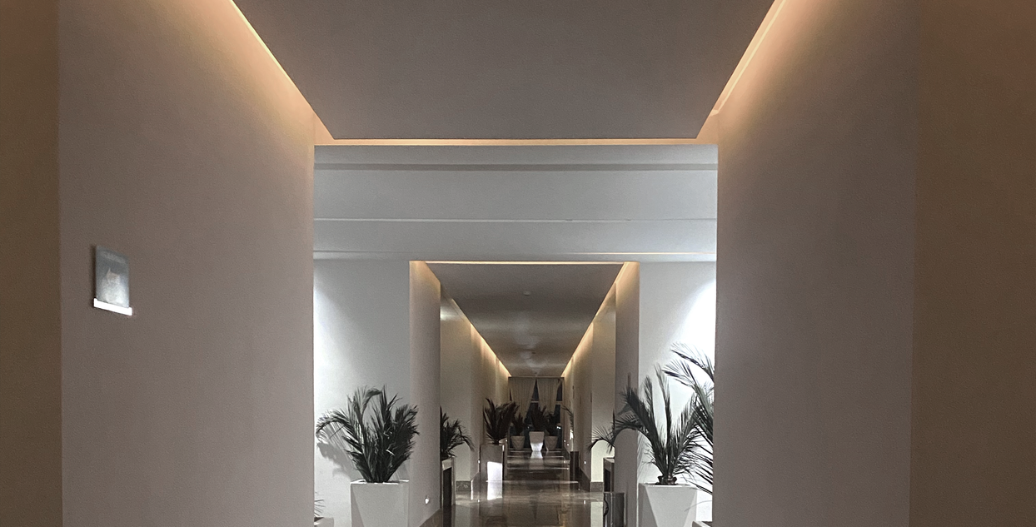

Hotel lighting upgrades can improve guest experience and reduce operating costs, but where you start makes a difference. Whether you're managing an existing property, renovating guest rooms, or refreshing high-traffic guest areas, thoughtful lighting decisions can help both the guest experience and your bottom line.
In this guide, we’ll walk through which areas deliver the strongest ROI, what drives cost savings, and how to balance design, quality, and practicality. No pressure, just helpful information to make planning easier for your property.
Where to Start: Prioritizing by ROI
When planning hotel lighting improvements, the best first step is focusing on spaces that run nearly 24/7. These areas consume the most energy, require the most maintenance, and often drive the fastest payback.
Highest-ROI Areas (24/7 Operation Spaces)
- Guest Corridors and Hallways
- Stairwells
- Public Spaces and Lobbies
- Parking Lots and Parking Garages
- Exterior Walkways and Building Lighting
These spaces operate around the clock, unlike guest rooms, which see much more limited daily lighting use. Because these fixtures are on continuously, switching to LED dramatically reduces energy consumption. Additionally, many of these areas require lifts or ladders for maintenance, so reducing replacement frequency translates directly into fewer labor hours and safety concerns.
Hotels also see meaningful benefits by upgrading meeting or convention spaces, pre-function areas, and other high-foot-traffic public spaces. While these may not operate 24/7, they host important events and must deliver reliable, consistent hospitality lighting.
Lower Priority (But Still Valuable) Areas
- Guest Rooms - lower daily operating hours
- Back-of-house spaces - important, but typically not guest-facing
- Storage or mechanical rooms - good candidates for broader upgrades
Because these areas are used less frequently, they typically produce slower paybacks. However, they can be addressed during planned renovations to consolidate costs and prevent future rework.
A Practical Approach
Most hotels adopt a phased plan. For example, a 100-room property might begin with guest corridors, lobby lighting, and parking areas – spaces with long runtimes and higher maintenance workloads. Then, as budget allows, or renovations occur, they expand upgrades into guest rooms and specialty areas.
Where the Savings Come From
Hotel lighting upgrades are one of the few improvements that reduce operating expenses immediately. LEDs deliver savings in several ways:
Energy Efficiency
LED fixtures use 60–75% less energy than halogen or incandescent lighting. For hotels (where public spaces, guest corridors, and exterior lighting run continuously), this adds up fast.
Maintenance Labor
Traditional lamps may need replacement every 6–12 months. LEDs, on the other hand, often last 50,000 hours, meaning significantly fewer service calls and reduced reliance on maintenance staff or outside vendors.
Less Guest Disruption
Fewer replacements mean fewer maintenance visits in guest rooms or hallways, which helps maintain the quiet, disruption-free experience guests expect.
Reduced Heat Load
LED lighting produces far less heat than older technologies, which lowers cooling demand in conditioned areas.
Better Consistency Over Time
LEDs don’t “color shift” the way legacy bulbs do. This means your guest areas, meeting or convention space, and pre-function areas maintain a polished, consistent appearance year after year.
Simple Comparison:
- Traditional lighting: replace bulbs annually and coordinate around guest occupancy
- LED lighting: replace fixtures every 5-10 years
Guest Experience Considerations
Lighting isn’t just functional – it plays a major role in how guests perceive comfort, safety, and quality.
Why Lighting Matters
- Smooth, flicker-free lighting signals attention to detail
- Consistency across guest corridors, lobbies, and public spaces builds a clean, polished impression
- Dimming controls allow properties to adjust ambiance throughout the day
- Instant-on lighting improves convenience and safety
- Bright, even exterior lighting enhances nighttime security
Color Temperature Guidelines
These ultimately depend on a hotel designer’s preference, but here are industry standards.
- Lobbies & Public Spaces: 2700K–3000K for a warm, welcoming feel
- Guest Corridors: Around 3000K for comfort and uniformity
- Parking & Security Lighting: 4000K–5000K for clarity and visibility
- Guest Rooms: 2700K–3000K for a relaxing in-room environment
Quick tip: Maintaining consistent color temperature across your property prevents a disjointed, mismatched appearance. Guests may not know why something feels off, but they’ll feel it.
What Affects Your Timeline and Budget
Every hotel property is different, but a few factors consistently influence cost and timing for hospitality lighting upgrades.
Payback Factors
- Which areas you address first (24/7 spaces = fastest ROI)
- Your current lighting type (halogen retrofits see the quickest gains)
- Local electricity costs
- Product quality and warranty
- Eligibility for utility rebates and incentives
Planning Considerations
- Coordinating guest room access without disrupting guests
- Managing work in public spaces or pre-function areas during off-peak hours
- Bundling upgrades with planned renovations
- Completing the project in phases rather than doing everything at once
Budget realities are simple: You don’t need to overhaul the entire property immediately. A phased approach works best for most hotels.
Working with Hospitality Lighting Suppliers
Choosing the right lighting partner matters, especially for hotels, where uptime and guest experience are critical.
What to Look For
- Experience with hospitality LED lighting (not just residential projects)
- Familiarity with guest room and public space requirements
- Ability to coordinate with hotel staff and minimize guest disruption
- Responsive technical support
- Reliable stock availability and realistic lead times
- Clear product documentation
- Straightforward warranties
Questions to Ask
- Can you help with lighting layouts for guest areas and meeting or convention space?
- Do you support phased hotel projects?
- What’s your average lead time for commercial orders?
- How do you handle warranty claims?
- Can you work with our contractors or facilities team?
- Do you assist with utility rebate paperwork?
How aspectLED Fits In
aspectLED works with hospitality lighting companies, contractors, and hotel owners to create lighting plans that balance aesthetics, efficiency, and cost. From guest corridors to public spaces and pre-function areas, aspectLED provides commercial-grade LED solutions designed for long runtimes, easy installation, and consistent performance.
Common Questions
How long do LED fixtures actually last in hotels?
Commercial-grade LEDs typically last 50,000 hours. That means about 5–6 years in 24/7 guest corridors and up to 10+ years in guest rooms.
Do we need to upgrade everything at once?
No. Most properties phase upgrades starting with high-use public spaces, guest corridors, and exterior areas.
Should we upgrade Guest Rooms?
Yes, just not necessarily first. They see fewer operating hours, so many hotels upgrade them during planned renovations for efficiency and long-term consistency.
What’s the difference between commercial and residential LEDs?
Commercial fixtures offer better thermal management, more robust drivers, and longer warranties – important for hospitality environments.
Will LED upgrades require rewiring?
Not usually. Many solutions are direct retrofits, but your lighting supplier or contractor can evaluate your specific property.
To Conclude
LED upgrades can meaningfully improve both guest satisfaction and operational efficiency, but the best approach depends on your property. Start with 24/7 areas for fast payback, prioritize quality for long-term reliability, and consider a phased plan that aligns with your renovation cycle.
Ready to explore options? Let’s talk about what makes sense for your property.
Planning a hotel lighting upgrade or new build? aspectLED works with hotel owners, property managers, and contractors to create phased lighting plans that fit your budget and minimize guest disruption. Whether you're upgrading guest corridors or refreshing your entire property, we can help you find commercial-grade lighting built for hospitality.
Products We Recommend
- LED Strip Lights - cove lighting, toe-kicks, under-bar edges
- Cloud Lighting / Reverse Cove Lighting
- LED Light Sheets
- Addressable LED Strip Lights for creative, dynamic effects
Contractors: Check out our Pro Program for project support, technical resources, and trade benefits.


