

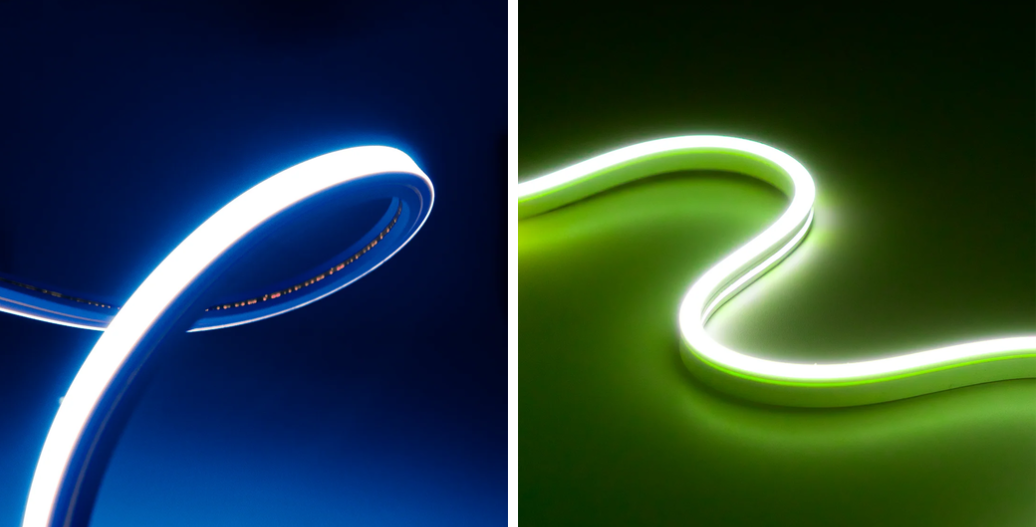

LED neon lighting offers the smooth, continuous appearance of traditional neon with the efficiency, flexibility, and versatility of LED technology. It is a popular choice for architectural accents, signage, decorative lighting, and custom installations.
But when selecting LED neon, one of the most important considerations is the direction the light can bend. Top bend and side bend LED neon are designed for different applications, and choosing the right option makes it easier to achieve the desired shape, layout, and finished appearance.
Here's what you need to know about the difference between top bend and side bend LED neon and when to use each.
What Is the Difference Between Top Bend and Side Bend LED Neon?
The main difference between top bend and side bend LED neon is the direction each product can flex.
- Top bend LED neon bends vertically, allowing it to curve up and down when viewed from the face of the light.
- Side bend LED neon bends horizontally, allowing it to curve left and right along the face of the light.
Both options provide continuous, diffused illumination, but their different bending directions make them better suited for specific shapes and installation requirements.
Top Bend LED Neon: Best for Vertical Curves and Architectural Shapes
Top bend LED neon flex bends up and down, perpendicular to the face of the light. This allows the neon to follow curves that move vertically rather than turning left or right.
Top bend is a good choice for applications where the lighting needs to follow flowing contours, elevation changes, or curved architectural surfaces.
Common applications for top bend LED neon include:
- Architectural accents: Highlight curved walls, ceilings, and architectural details.
- Decorative shapes: Create waves, flowing lines, and custom illuminated designs.
- Cove and ceiling features: Follow curved transitions and changes in elevation.
- Outdoor installations: Add continuous illumination to architectural features and exterior designs.
The Element Neon Wide TopFlex Static White provides a smooth, dotless line of light in multiple white color temperatures. For applications that call for dynamic color, the Element Neon Wide TopFlex RGB offers color-changing capabilities.
For high-temperature environments, the Sauna Neon Light is another top-bend option specifically designed for sauna applications.
Side Bend LED Neon: Best for Signs, Lettering, and Outlines
Side bend LED neon flex bends left and right along the face of the light. This allows it to follow horizontal curves while keeping the illuminated face oriented in the intended direction.
Side bend is especially useful for projects that require precise outlines, tighter design control, or custom shapes that turn from side to side.
Common applications for side bend LED neon include:
- Signage and lettering: Create illuminated letters, words, and custom signs.
- Logos and branding: Outline logos and branded design elements.
- Architectural outlines: Trace the perimeter of walls, displays, and other features.
- Decorative accents: Create horizontal curves and custom shapes for commercial and residential spaces.
- Retail and hospitality: Highlight displays, bars, feature walls, and other focal points.
The Element Neon SideFlex RGB provides flexible, color-changing illumination for custom shapes and decorative applications. The Borealis Neon SideFlex Addressable RGB takes customization further with individually addressable lighting effects, allowing for dynamic colors, transitions, and animations.
Top Bend vs. Side Bend: Which Should You Choose?
The best option depends on the direction your design needs to curve.
 |
 |
|
| Feature |
Top Bend |
Side Bend |
| Bending Direction | Up and down | Left and right |
|
Best For |
Vertical curves and flowing shapes |
Horizontal curves and outlines |
|
Common Applications |
Architectural accents, waves, curved surfaces | Signs, lettering, logos, custom outlines |
|
aspectLED Product Families |
Element TopFlex, Sauna Neon |
Element SideFlex, Borealis SideFlex |
One important consideration: LED neon flex is designed to bend in a specific direction. It should not be twisted or forced to bend along an unsupported axis. Doing so can damage the internal components and affect performance. Always follow the product's specified bend direction and minimum bend radius when planning an installation.
What Else Should You Consider When Choosing LED Neon?
Beyond bending direction, consider a few other factors when selecting LED neon for your project:
- Light color: Determine whether you need static white, RGB color-changing, or addressable RGB lighting.
- Installation environment: Check the product's IP rating and temperature specifications to ensure it is suitable for the application.
- Mounting requirements: Determine whether you need LED Neon Flex Accessories, such as mounting clips or aluminum channels.
- Power and controls: Confirm voltage, wattage, power supply requirements, and controller compatibility.
- Bend radius: Make sure the product can accommodate the curves in your design without exceeding its minimum bend radius.
Find the Right LED Neon for Your Project
Both top bend and side bend LED neon create a clean, continuous line of light, but the right choice comes down to the shape and direction of your installation.
Choose Top bend LED neon for vertical curves, flowing architectural features, and designs that move up and down. Choose Side bend LED neon for lettering, logos, horizontal curves, and custom outlines.
Not sure which profile is right for your application? Explore aspectLED's LED Neon Lighting Collection or connect with our team for help selecting the right LED neon solution.


