


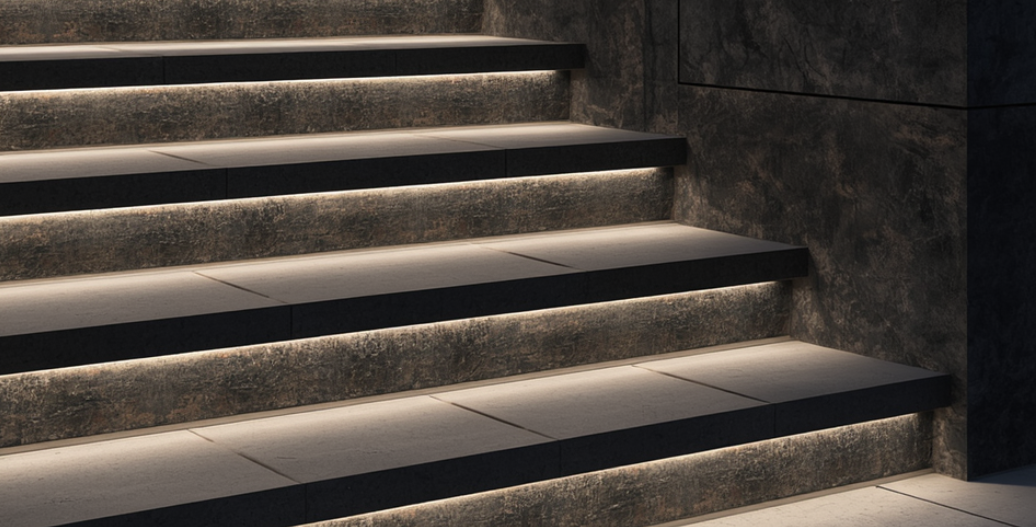

Outdoor stair lighting is one of the most impactful upgrades a hardscape can receive. Clean, continuous lines of light integrated into concrete or stone elevate the overall design while massively improving nighttime visibility. For electricians, contractors, and builders, these projects also come with high expectations. Once the masonry is set, there is little room for error, and the outdoor environment throws constant stress at every component in your system.
A successful, professional installation comes down to dialing in your prep work, selecting the right gear, and coordinating seamlessly with other trades. When approached correctly, you deliver a hardscape lighting setup that looks incredibly sharp, performs consistently, and minimizes costly callbacks.
First, Know the Rules!
Outdoor low-voltage lighting has to play by the rules. Following National Electrical Code (NEC) guidelines and basic stair construction standards is essential, not just for passing inspection, but for ensuring long-term, bulletproof system safety.
First, let's talk about the physical rules of the stairs. If you look at the rulebook, specifically the International Residential Code (IRC) and the International Building Code (IBC), a stair tread overhang (the nosing) is required to sit strictly between 3/4-inch and 1-1/4-inches. This isn't just a suggestion; it's a critical safety sweet spot designed to prevent slipping or catching a toe.

When you add an mounting channel over or under that lip, the addition of the channel cannot make the stairs extend out of these recommended safety rules. The profile must stay tucked and low-profile; it cannot push the overhang past the 1-1/4-inch maximum limit or create a lip that catches a boot. Enhancing a step with light should never introduce a tripping hazard.
On the electrical side, NEC Article 411 governs low-voltage lighting systems operating at 30 volts or less. The absolute foundation of a safe system is a Class 2 power supply, which limits voltage and current to eliminate the risk of fire and electric shock. This is mandatory in wet locations where water and electricity mix.
All components should carry a UL or ETL listing rated for wet environments. To avoid issues in the field, keep these essentials in mind:
- Use a Class 2 LED power supply rated for wet or damp locations.
- Verify UL or ETL listings.
- Install power supplies in accessible, protected enclosures.
- Follow proper low-voltage wiring and protection methods.
For outdoor stair applications, selecting a reliable LED power supply designed for these exact conditions is critical.
The 24VDC Advantage
Voltage selection makes or breaks how well an outdoor lighting system performs. Stair lighting often requires long wire runs, especially when the power supply is remotely located in a dry, accessible area.
While 12-volt systems are common, 24V DC is the ultimate choice for these applications. By doubling the system voltage, you effectively halve the current required to produce the exact same wattage. Since voltage drop is directly tied to the amount of current traveling through the wire, cutting that current in half drastically reduces the drop. This guarantees a clean, consistent brightness across the entire run, eliminating that amateur look of dim or yellowing light at the far end of the steps. 24V DC systems allow for longer runs, straightforward wiring, and a premium finished result that is simple enough to execute flawlessly, even for an electrician on the inexperienced side.
Waterproof 24V LED strip lights are designed specifically for these setups.
Keep it Dry
The outdoors will test every piece of your installation. Moisture, relentless UV exposure, and brutal freeze-thaw cycles will quickly break down cheap materials.
LED strips should never be stuck directly to concrete or stone. Adhesive backing alone will fail fast. Instead, you need a layered approach to armor the lighting system and maintain a crisp, architectural finish. A durable outdoor setup needs:
- An aluminum channel for rigid structure, heat management, and physical protection.
- A UV-resistant lens to prevent yellowing, cracking, and glare.
- An IP67 or IP68 rated LED strip for total moisture defense.
- Mechanical fastening methods instead of just hoping the tape holds.
At the core of this approach is the LED aluminum channel.
Planning and Wire Management
Coordination with the concrete and masonry crews is everything, especially in new builds. Before a single yard of concrete is poured or stone is set, run your conduit. Dropping pull strings in that conduit makes running wire later an absolute breeze. Keep an eye on the conduit during the pour to ensure it doesn’t get crushed.
In retrofit scenarios, installers usually cut clean channels into the mortar joints rather than grinding the stone itself. This conceals the wiring while protecting the structural integrity of the stairs. Once wired, lock it all down with a flexible, weather-rated sealant that allows for natural expansion and contraction.
Secure Your Terminations
Every single connection must be 100% waterproof. A single drop of moisture at a connection point equals corrosion and eventual failure. Taking ten extra minutes to properly seal connections is the ultimate callback-killer.
Lighting Options and Reliable Controls
The choice between single-color and RGBW systems dictates your wiring complexity and the overall vibe of the project.
Single-color LED strip lighting is usually the cleanest choice for stair applications. It provides a timeless look and requires a simple two-wire connection. RGBW systems offer awesome dynamic color control but demand more conductors, larger conduit, and careful planning.
When evaluating your lighting controls, the user experience is everything. A control system with a clunky app that puts the customer at risk with bad software is a massive non-starter. aspectLED controls have a high-quality feel and are incredibly simple to setup.
Safety and Environmental Considerations
Again, stair lighting should enhance safety, not introduce new hazards. Managing glare is huge, especially on wet or polished stone where reflections can blind you. Using angled channels or frosted, diffused lenses directs the light exactly where you need it, on the walking surface, without exposing the LEDs.
Fixture placement matters. Keep the channels installed tight into the junction of the tread and riser. As mentioned with the stair rules, nothing should protrude into the walking path to catch a shoe, a snow shovel, or landscaping equipment.
To Conclude
Pulling off a clean LED strip lighting install on concrete and stone stairs requires sweating the details at every step. From playing by the rules and locking in your 24VDC voltage selection, to picking reliable controls and planning the hardscape integration, every choice matters.
Using 24V systems eliminates voltage drop, while combining IP-rated LED strips with aluminum channels delivers the rugged durability outdoor environments demand. When you execute this layered, well-planned approach, the result is an incredibly clean installation that looks amazing and stands the test of time.
Take Your Installations Further
Outdoor hardscape lighting demands dependable gear and sharp execution. If you are regularly tackling exterior concrete and stone stair applications, having the right tools and resources makes every job faster, easier, and more profitable.
Join the aspectPRO Program to access contractor pricing, expert guidance, and professional-grade lighting solutions built to perform in the toughest outdoor environments.
If you have any questions on your specific project, reach out to our sales team at sales@aspectled.com.


