

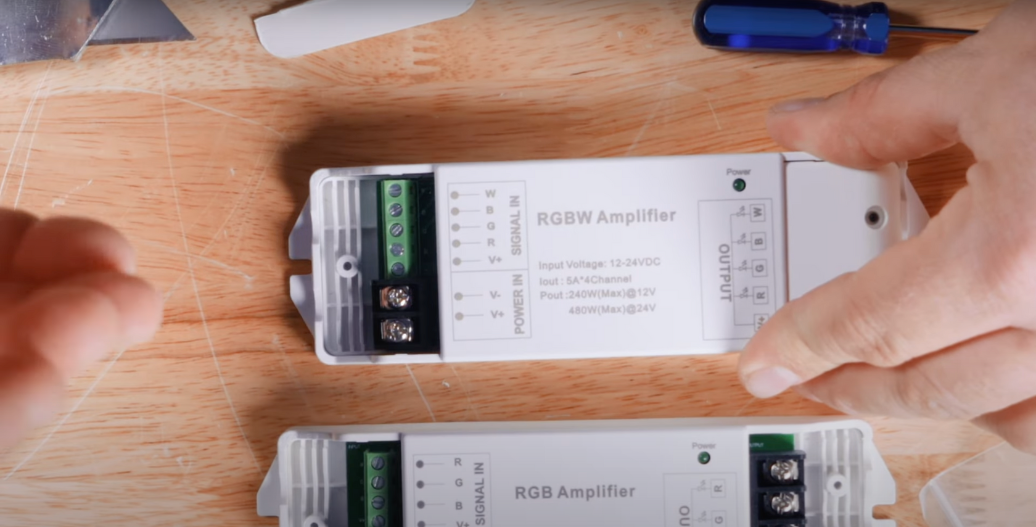

When designing large-scale or high-wattage LED lighting systems, one common limitation is the maximum load a single PWM controller or dimmer can handle. That’s where a PWM booster, also known as a signal amplifier, becomes essential. This device is engineered to replicate and amplify the controller’s output signal, allowing you to control significantly more LED fixtures without compromising performance. Whether you're working with RGBW, tunable white, or single-color LEDs, PWM boosters offer a scalable, modular solution that expands your system’s capabilities while ensuring consistent light output and synchronization.
What is a PWM Booster (Signal Amplifier)?
A PWM booster (signal amplifier) is designed to duplicate the signal from a PWM controller, dimmer, or RF receiver (such as the Wireless RGBW 4 Channel Controller). PWM controllers have power limitations, meaning they can only handle a certain wattage. The PWM booster helps to overcome this limitation allowing you to control a larger load of LED lights from a single controller.
Not only does it increase capacity, but it also allows for scalability. Instead of being restricted by a controller’s built-in limits, you can connect multiple boosters to a single controller to expand your lighting system as needed. This makes it an essential tool for large-scale LED installations where simultaneous control of all the lighting from a single controller is desired.
Why Use It?
PWM controllers and dimmers have load limitations. This can be challenging when controlling a large number of LEDs. Rather than creating a single, oversized controller, PWM boosters provide a modular solution, letting you expand your system dynamically.
By using a PWM booster, you can:
- Extend the reach of your signal without voltage drop affecting performance.
- Increase the total wattage capacity beyond what a single controller allows.
- Maintain synchronization across all connected lights, ensuring consistent dimming and color output.
How to Use It
The PWM booster (signal amplifier) should be mounted in a dry location with adequate ventilation. When wiring your controller, the signal output from the controller is wired to the signal input on the booster. Next, connect the power supply output to the booster’s power input terminals. Always make sure to use a properly sized power supply, capable of supporting the load of the LED lights. Your LED lights will then get connected to the output of your booster. Please see our RGBW PWM Booster Signal Amplifier Installation Guide for step-by-step instructions.
For large installations, multiple boosters can be used by repeating this process. Each booster is connected to the output from a single controller and will have its own power supply to support the LED’s connected to the individual booster.
Installation and Wiring Considerations
One important consideration is the current limit per channel. Each channel has a 5A max load, so at 24V, the formula is: 5A × 24V = 120W per channel. As long as you stay within this limit per channel, you can expand your system as much as needed.
One of the most common mistakes is placing a booster at the end of a long run of LED strip lights which increases the risk of the signal degrading by the time it reaches the booster. If the signal has already degraded before it reaches the booster, the colors won’t match properly between the original and extended sections. Instead, all boosters should be wired directly from the main controller to ensure uniform performance.
Another mistake is double-tapping signal terminals - connecting two wires to a single terminal. This can cause unreliable connections and inconsistent operation. Instead, use wire connectors to branch signals properly. Each wire should have its own dedicated connection point to maintain a clean, stable and reliable connection for your entire lighting system.
When to Use
The PWM booster is designed for low-voltage (12V and 24V DC) LED systems that rely on PWM dimming and control. Even though it is called an RGBW amplifier, it can be used in various applications beyond just color-changing LEDs. For tunable white and single-color installations, the output wiring is slightly different, but the concept remains the same: the booster takes the incoming signal from the controller output and amplifies it, allowing you to control more fixtures without exceeding controller limits. It’s particularly useful for installations involving RGBW and tunable white LED installations where the following controllers are used:
By using PWM boosters, you can maximize the potential of these controllers and create larger, more flexible lighting systems without being limited by wattage constraints.
Final Thoughts
PWM boosters are a powerful tool for overcoming the load and range limitations of standard LED controllers. By amplifying the signal and distributing the power load, they enable greater flexibility, scalability, and reliability in LED installations. Whether you're lighting a single large space or creating a complex, multi-zone system, integrating PWM boosters ensures smooth operation, synchronized dimming, and the freedom to grow your setup without being restricted by the capabilities of a single controller.


