

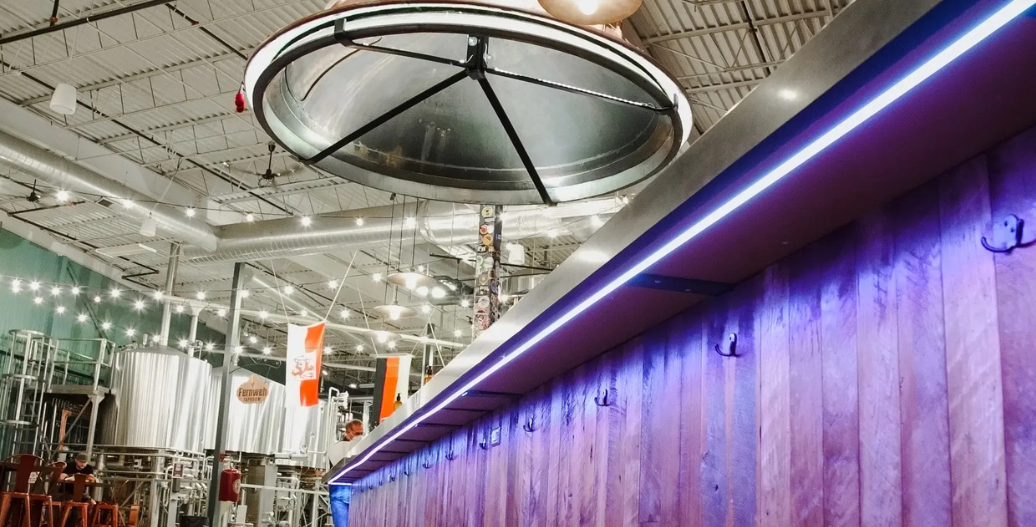

LED strip lights are an easy way to add flexible, low-profile lighting to almost any space. aspectLED strips are designed to be Class 2, meaning the strips themselves are low-power and inherently safe. But here’s the twist: the overall circuit can stop being Class 2 if the power supply is too large. That’s why, even with Class 2 strips, using an mounting channel with a lens is often the safest and smartest choice.
This is all about volt-amps (VA). While the strips themselves are Class 2, the total energy delivered by the system determines how risky the installation really is.
Class 2 Strip Lights vs. Non-Class 2 Circuits
Class 2 strip lights are low power by design. They typically operate at voltages under 60V DC and currents that keep the strip under 100 VA. That makes them safe to handle, easy to install, and much less likely to overheat.
The catch comes when you pair those strips with a high-wattage power supply. For example:
- A 300-watt power supply can drive multiple strip lights at higher total current.
- Even though each strip is Class 2, the total circuit now exceeds 100 VA.
- That means the circuit itself is no longer Class 2, and the risk of heat, shorts, or accidental contact increases.
In other words, the strips are still low-power individually, but the combined energy in the circuit now behaves like a higher-power system. That’s where a channel and lens make a big difference. This is where it matters on a job site. If an inspector sees an unprotected strip running on a non-Class 2 circuit in an accessible location, you’re going to have a conversation you don’t want to have. A channel and lens take that conversation off the table.
Why a Channel Matters
High-VA circuits, even with Class 2 strips, need protection from physical damage. LED strips are flexible boards with exposed copper pads. Without protection, they can be:
- Snagged while installing
- Poked or bumped during maintenance
- Damaged by accidental contact
For a circuit that exceeds 100 VA, the consequences of damage are higher. Shorts, sparks, or overheating become more likely. An aluminum channel provides a sturdy enclosure that:
- Supports the strip light and keeps it flat
- Protects it from accidental knocks or bumps
- Provides a surface for heat to dissipate
The channel acts like armor for the strip and helps keep the installation safe even when the circuit is technically “non-Class 2.” It also gives you a clean answer if the AHJ questions the installation. An enclosed strip in an aluminum channel with a lens shows you’ve addressed physical protection, touch safety, and thermal management, all in one detail. That’s a much easier inspection than trying to explain why bare strips are acceptable on an open shelf.
Why the Lens Adds Safety
A lens is often thought of as just a way to smooth out the light, but with high-VA circuits, it plays an important safety role. Even Class 2 strips can have exposed solder points, and when the total circuit exceeds 100 VA, the risk of accidental contact or arcing increases.
A lens:
- Protects fingers and hands from touching live parts
- Shields the strip light from dust, dirt, and moisture that could cause shorts
- Keeps the installation looking clean while adding a layer of safety
When paired with a channel, the lens makes the circuit safer, protects the strips, and reduces the chance of failure over time. From a code perspective, exposed energized conductors in accessible spaces are going to get flagged. The lens gives you a physical barrier between the live parts and anyone who might reach in, whether that’s a maintenance tech, a cleaning crew, or an inspector with a flashlight.
Heat Management: High-Power Circuits Can Run Hot
Another reason a channel is important is heat. Individual Class 2 strip lights run cool, but when you combine multiple strips with a 300-watt or larger supply, the total heat in the system increases. Directly mounting multiple high-output strip lights on wood, drywall, or millwork without a heat sink can create hot spots.
Aluminum channels act as a heat sink, spreading heat across a larger surface area. This reduces peak temperatures and helps:
- Maintain strip light longevity
- Protect adhesives and mounting surfaces
- Reduce the risk of overheating nearby materials
The lens also helps by keeping dust and debris off the strip light, which can contribute to heat buildup over time. Together, the channel and lens make high-VA circuits much safer. Hot spots on combustible surfaces aren’t just a performance issue, they’re a liability issue. If a strip delaminates from heat and fails six months later, that’s a callback. If it discolors or damages millwork, that’s a claim. The channel is cheaper than either one.
Solving Multiple Issues with One Simple Solution
Using a channel with a lens addresses three major concerns for circuits that exceed 100 VA:
- Mechanical protection: the channel shields the strip lights from bumps, snags, and accidental damage.
- Electrical protection: the lens keeps exposed copper pads safe from touch, dust, and moisture.
- Thermal management: the aluminum channel spreads heat, keeping the strips and surrounding surfaces cooler.
Rather than trying to solve these issues separately, a channel with a lens handles all of them at once. This is why even Class 2 strip lights benefit from a channel in high-power applications.
When a Channel Might Not Be Needed
If you are using a single low-power Class 2 strip light powered by a small supply under 100 VA, a channel may not be strictly necessary. These systems are inherently safer, and the risk of overheating or accidental contact is low.
However, once you add multiple strips or a larger supply, the total VA can quickly exceed 100, turning the circuit into a higher-risk system. That is the point where a channel and lens are strongly recommended.
Practical Tips for Safe Installations
Here are some ways to ensure safety when working with Class 2 strips and high-power supplies:
- Check the total VA of the circuit, not just the individual strip light rating.
- Use an aluminum channel for strip lights in circuits over 100 VA to provide protection and heat dissipation.
- Install a lens to guard live parts and reduce dust or moisture exposure.
- Avoid mounting strip lights directly on combustible surfaces without proper heat management.
- Follow manufacturer instructions for maximum run length, total load, and installation methods.
Following these steps ensures a safer, more durable installation, and gives peace of mind that your setup will last.
The Bottom Line
Even though aspectLED strip lights are Class 2, using a power supply over 100 VA changes the nature of the circuit. It is no longer power-limited in the same way, and the risk of heat, shorts, or accidental contact increases. Installing the strip lights in an aluminum channel with a lens is the simplest and most effective way to address these risks.
A channel and lens handle mechanical protection, touch safety, and heat management in one detail. It’s the kind of install that passes inspection without a second look and doesn’t generate callbacks six months later. For high-VA circuits with Class 2 strips, it’s not optional, it’s just how it should be done.
For more expert installation tips, product guidance, and industry insights, join our Pro Program. Members receive exclusive discounts, priority support, and practical advice designed to help you complete LED installations with confidence.


