


LED strip lights are flexible, versatile, and relatively easy to install, but that does not mean they are indestructible. Improper handling, incorrect electrical connections, and exposure to the wrong environmental conditions can damage LED strip lights, shorten their lifespan, or cause them to stop working altogether.
Whether you're installing under cabinet lighting, accent lighting, or a large-scale commercial lighting system, knowing what not to do is just as important as knowing how to install it correctly.
At aspectLED, we think about proper LED installation through five categories known as the Five ALs: Electrical, Physical, Environmental, Credential, and Optical. When it comes to handling LED strip lights, three of these categories deserve particular attention.
Here are some of the most common LED strip light handling mistakes to avoid.
1. Electrical: Avoiding Improper Connections and Power Issues
Electrical mistakes are among the most common causes of LED strip light failure. Using the wrong power supply, exceeding recommended run lengths, or making poor connections can result in flickering, overheating, inconsistent brightness, or permanent damage.
Using the Wrong Voltage
Always match the output voltage of your power supply to the voltage requirement of your LED strip light. For example, a 24V LED strip light requires a 24V DC power supply.
Connecting a 12V strip light to a 24V power supply can cause excessive current and damage the LEDs. Conversely, powering a 24V strip light with a 12V supply may result in dim or inconsistent illumination.
Ignoring Maximum Run Length and Voltage Drop
Every LED strip light has a recommended maximum run length. Exceeding that length without proper power injection can cause voltage drop, resulting in reduced brightness or uneven illumination along the strip.
Pay attention to the maximum run length recommendations (they're in the spec charts) and consider the overall electrical load when designing your installation. For longer runs, you may need additional power feeds or a different wiring configuration.
Using an Incompatible Dimmer
Not all dimmers work with all LED power supplies. Using an incompatible dimmer can cause flickering, buzzing, limited dimming range, or unreliable performance.
For example, a phase dimmer is not necessarily compatible with a dimmable power supply. Always verify dimmer and power supply compatibility before connecting your system.
Leaving Wires Exposed
Exposed or improperly insulated wires can create a short circuit if conductors come into contact with each other or conductive surfaces. Make sure all electrical connections are properly insulated and secured before powering on your lighting system.
Bypassing the Power Supply
Never connect low-voltage LED strip lights directly to line voltage (standard voltage). LED strip lights designed for 12V or 24V DC require a compatible power supply to convert incoming line voltage to the appropriate low voltage.
Bypassing the power supply can immediately destroy the strip light and create a serious electrical safety hazard.
Poor Soldering Techniques
Soldering requires care, especially when working with the small copper pads on LED strip lights. Applying too much heat for too long can damage the circuit board or surrounding components.
Using too much solder can also create unwanted connections between adjacent copper pads. Use the appropriate soldering equipment, apply heat carefully, and avoid excessive solder.
Misaligned or Improperly Closed Connectors
Connectors need to make proper contact with the copper pads on the strip light. If a connector is crooked or misaligned, it may not establish a reliable electrical connection.
Make sure the strip is fully inserted, the contacts are aligned with the copper pads, and the connector blades are completely inserted and flush. A connection that looks secure but isn't making proper contact can cause intermittent operation or sections of the strip to stop working.
2. Physical: Protecting the Strip Light from Damage
LED strip lights are flexible, but flexibility has its limits. The circuit board, copper traces, LEDs, and other components can be damaged by excessive force or improper handling.
Do Not Fold, Crease, or Overbend the Strip
LED strip lights are designed to bend within their specified limits, not fold like paper. Folding or creasing a strip can break internal copper traces and damage electrical components.
Always follow the minimum bend radius and avoid forcing the strip around tight corners. Use appropriate connectors or mounting channels when the application requires directional changes.
Do Not Twist the Strip Light
Twisting a strip light can place uneven stress on the circuit board and electrical components. This can lead to damaged connections, broken traces, or inconsistent lighting.
Keep the strip flat and properly aligned during installation. If you need to change direction, use a suitable corner connector or make the transition with properly soldered connections where permitted.
Cut Only at the Designated Cut Marks
Most LED strip lights have designated cut marks that indicate where the strip can be safely cut. Cutting outside these marks or making a crooked cut through the copper pads can damage the circuit and prevent connectors from making proper contact.
Always use sharp scissors or an appropriate cutting tool and make a clean, straight cut along the designated mark.
Summit Free Cut LED Strip Lights are designed to be cut at more flexible intervals. Even these require the cut to be perpendicular to the orientation of the strip (not angled). Always check the specific product's cutting instructions before making a cut.
Do Not Step on or Strike Strip Lights
LED strip lights are not designed to withstand impact or heavy pressure. Stepping on them, dropping tools on them, or hitting them with hard objects can crack components, damage the circuit board, or break electrical connections.
Even if the strip still illuminates after being stepped on, internal damage may affect its long-term performance.
And while it might be tempting to use a strip light as a target for your next golf swing, we'd recommend keeping the golf clubs away from the lighting.
Don't Use Wire Staples
When the adhesive backing on the strip light isn't adhering to the surface you're mounting to, it's tempting to use wire staples. However, do not do that. Standard wire staples can crush, puncture, or damage LED strip lights. They can also damage the circuit board or create electrical shorts.
Use mounting clips, compatible channel, or manufacturer-recommended mounting methods instead. Choose a mounting solution that secures the strip without putting pressure on its components.
3. Environmental: Installing LED Strip Lights in the Right Conditions
LED strip lights are available with different environmental protection ratings, but not every strip is suitable for every application. Exposure to excessive moisture, heat, or improper operating conditions can affect performance and longevity.
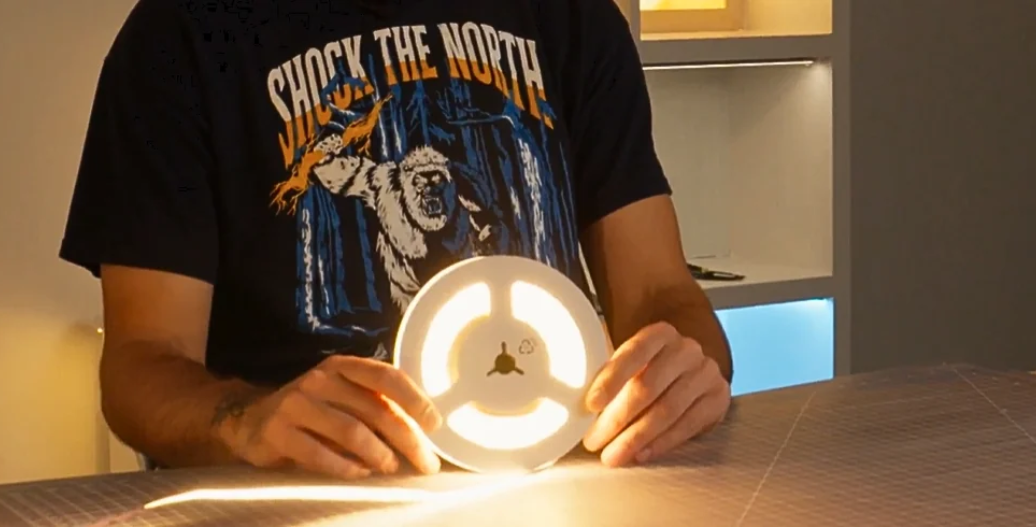
Do Not Leave Strip Lights Powered on the Reel
LED strip lights generate heat during operation. When left tightly wound on a reel, heat cannot dissipate as effectively as it can when the strip is fully unrolled and installed.
This can cause excessive heat buildup and potentially damage the LEDs or surrounding materials.
Always unroll LED strip lights before powering them for extended periods. Follow the instructions for testing and operating strip lights on a reel. It is recommended to never have the strip light powered on the reel for more than 10 seconds.
Choose the Right IP Rating for the Environment
Not all LED strip lights are waterproof. Installing a strip light in an environment with more moisture than its IP rating allows can result in water intrusion, corrosion, electrical shorts, or product failure.
Consider the conditions where the strip will be installed, including exposure to water, humidity, dust, and cleaning processes. Select an appropriate IP rating for the application.
For example, a dry indoor installation may only require an IP20 strip light, while an application exposed to splashing water may require a higher level of protection.
Keep Electrical Connections Out of Water
Even when using a waterproof LED strip light, electrical connections require special attention. Connectors, solder joints, power supplies, and other connection points must have appropriate protection for the installation environment.
Never assume that a waterproof strip light makes the entire lighting system waterproof. Protect all connections using compatible waterproof connectors, enclosures, and sealing methods as required. Also follow the National Electrical Code (NEC) for proper installation location.
Avoid Excessive Heat
LED strip lights are sensitive to excessive operating temperatures. Installing them near ovens, high-temperature equipment, or other heat sources can cause the strip to overheat.
Excessive heat can degrade LED components, discolor materials, weaken adhesives, and shorten the overall lifespan of the product.
Consider the ambient temperature of the installation area and follow the operating temperature specifications. Proper heat dissipation is especially important in enclosed installations and applications with limited airflow. Some applications have specific requirements. For example, when installing LED strip lights in closets, proper placement and ventilation can help maintain performance and longevity. Learn more in our guide to LED Strip Lighting in Closets.
What About Credential and Optical?
The Five ALs also include Credential and Optical considerations. While these categories are important when selecting and designing an LED lighting system, they are not primary handling concerns.
Credential focuses on the qualifications, standards, and requirements associated with the installation. Optical focuses on the quality and characteristics of the light itself, including color temperature, color rendering, and light distribution.
For this article, the biggest opportunities to prevent damage come down to proper electrical connections, careful physical handling, and selecting the right environmental protection.
Handle LED Strip Lights With Care for Better Performance
LED strip lights are a versatile lighting solution, but proper handling makes a difference in how well they perform over time. Avoiding common mistakes like incorrect wiring, excessive bending, improper cutting, and exposure to unsuitable environments can help prevent premature failures and unnecessary replacement costs.
At aspectLED, we offer a range of LED strip lights, neon lights, power supplies, connectors, mounting channel, and accessories to help you build a lighting system that works for your application.
Have questions about your next LED strip light installation? Our team is here to help you find the right products and make sure your lighting system is set up for success.


