

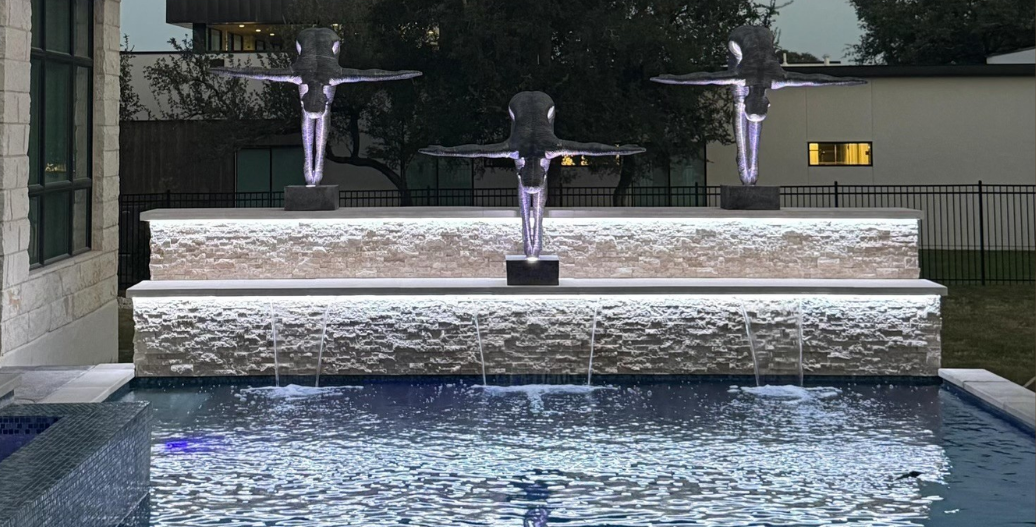

A swimming pool needs a UL 379 listed power supply because the National Electrical Code (NEC) requires any transformer or power supply feeding underwater or pool-area lighting to be specifically listed, labeled, and identified for pool and spa use, not just listed as a general-purpose transformer. UL 379 is the safety standard that tests and certifies power supplies for exactly this application, and NEC Article 680 makes that listing a legal requirement, not an optional upgrade.
What Is UL 379, Specifically?
UL 379 is Underwriters Laboratories' safety standard for power supply cords, transformers, and power units used with swimming pool, spa, and fountain equipment. A power supply carrying the UL 379 mark has been tested for the conditions unique to pool environments: constant moisture exposure, chlorine and salt corrosion, submersion risk, and the consequences of an internal fault when a person is standing in water. General-purpose UL 1838 landscape transformers, for comparison, are tested for dry-yard conditions and do not meet this bar.
What Does the NEC Actually Require?
Article 680 governs all electrical installations for pools, spas, hot tubs, and fountains, and its stated purpose is blunt: keep people and electricity separated. Two sections make the UL 379-style listing mandatory:
- 680.23(A)(2) Transformers and Power Supplies: Any transformer or power supply feeding an underwater luminaire, along with its enclosure, must be listed, labeled, and identified for swimming pool and spa use. It must also incorporate either an isolated winding with a grounded metal barrier between the primary and secondary windings, or an approved system of double insulation between them.
- 680.22(B)(6) Low-Voltage Luminaires Near the Pool: Low-voltage fixtures installed less than 5 feet from the pool's inside wall are only permitted if they don't require grounding, stay under the low-voltage contact limit, and are supplied by a transformer or power supply that meets the same pool-rated standard, 680.23(A)(2).
In practice, this closed a loophole that used to let installers use ordinary landscape lighting transformers near pools. Since the 2014 NEC cycle, a code violation; only a pool-and-spa-listed power supply satisfies the requirement.
Why Do Pools Need This Extra Layer of Isolation?
The double-isolation requirement exists because water conducts electricity, and a person in a pool has no meaningful footwear, dry skin, or other insulation between them and any stray voltage. A standard transformer relies on winding insulation alone to keep the primary (120V/240V) side separated from the secondary low-voltage side. If that insulation fails, energized primary voltage can appear on the low-voltage output which is the exact circuit that runs into or near the water.
A UL 379 power supply prevents that failure mode in two ways:
- Grounded metal barrier design: A physical, grounded shield sits between the primary and secondary windings, so winding fault shorts to ground instead of energizing the low-voltage side.
- Double insulation design: Two independent, redundant insulation systems must both fail before a fault path exists.
Either approach means a single internal fault can't put dangerous voltage into pool water. That's a materially higher bar than general electronics safety testing, which is why UL 379 exists as its own standard rather than folding into UL 1838 or basic UL 60950-style listings.
Does This Apply to LED Strip Lights and Low-Voltage Fixtures Too
Yes. The requirement isn't limited to traditional underwater pool lights. Any low-voltage lighting, including LED strips or fixtures, installed within 5 feet of the pool wall, or anything that qualifies as an underwater luminaire, must be powered through a supply that meets 680.23(A)(2). A 12V or 24V DC driver that isn't pool-and-spa listed doesn't qualify just because the output voltage is low; the code cares about the isolation design inside the power supply, not just the number on the label.
What Happens If a Non-Listed Power Supply Is Used?
Beyond the safety exposure described above, using a non-UL 379 power supply on pool lighting typically means:
- Failed inspection. Electrical inspectors check listing marks on pool-adjacent equipment; a general-purpose transformer will get flagged and require replacement before final sign-off.
- Voided insurance and liability exposure. An electrical incident traced to non-code-compliant equipment can affect homeowner's insurance claims and contractor liability.
- No UL 508A panel compatibility. For anyone building or specifying a control panel for pool equipment, only UL 379-listed supplies streamline that approval process; non-listed components complicate or block panel certification.
Is GFCI Protection Still Needed With a UL 379 Power Supply?
Usually yes, but with a documented exception. Underwater luminaires and related equipment generally require GFCI protection under 680.23(A)(3) and related sections. However, where a fixture is listed for 15 volts or less and is supplied through a transformer or power supply meeting 680.23(A)(2), GFCI protection on the low-voltage side of that specific transformer isn't required, since the isolation design itself is treated as the protective measure. GFCI protection is still required upstream on the branch circuit feeding the transformer's primary side in most installations. Because these exceptions are installation-specific, verifying the exact requirement against the current adopted code cycle and local amendments is the safer path for anyone specifying equipment.
To Summarize
A UL 379 listing isn't a marketing distinction. It's the specific, code-mandated proof that a power supply's internal isolation design has been tested to prevent line voltage from ever reaching pool water through a fault. NEC 680.22(B)(6) and 680.23(A)(2) both point to it directly, which means for permanently installed pools, spas, and adjacent low-voltage lighting, a UL 379-listed power supply isn't just a best practice, it's the minimum the code allows.
This article reflects the 2023 National Electrical Code. Always confirm the code edition and any local amendments adopted by the jurisdiction with authority over the installation before finalizing a design.


