


LED strip lighting has become a go-to solution for residential, commercial, and specialty applications. Its flexibility, low profile design, and wide range of outputs make it incredibly adaptable. However, one LED strip light does not fit every project. Choosing the right product for the application is what separates an average installation from a professional, high-performing result.
The type of LED strip light you select directly impacts brightness, longevity, heat management, visual comfort, and overall client satisfaction. Whether you are a homeowner planning a renovation or a contractor managing multiple projects, understanding the differences between task, accent, ambient, and color-changing lighting will help you make the right decision the first time.
Why Choosing the Right LED Strip Light Matters
An LED strip light is not just a decorative accessory. It is a lighting system that must align with the purpose of the space. Selecting the wrong output or configuration can lead to common issues such as:
- Insufficient brightness for work areas
- Harsh glare or visible diode spotting
- Over-lighting in areas meant to feel subtle
- Heat buildup from improper installation
- Callbacks due to unmet customer expectations
For contractors, electricians, and designers, these issues translate into lost time and added cost. A well-matched LED strip light reduces installation headaches, improves efficiency on site, and minimizes the likelihood of return visits.
When the lighting is properly specified, it enhances the design intent and performs reliably for years.
Task Lighting: Clarity and Performance First
Task lighting is designed to support activities that require focused illumination. This includes cooking, reading, assembling materials, or performing detailed work.
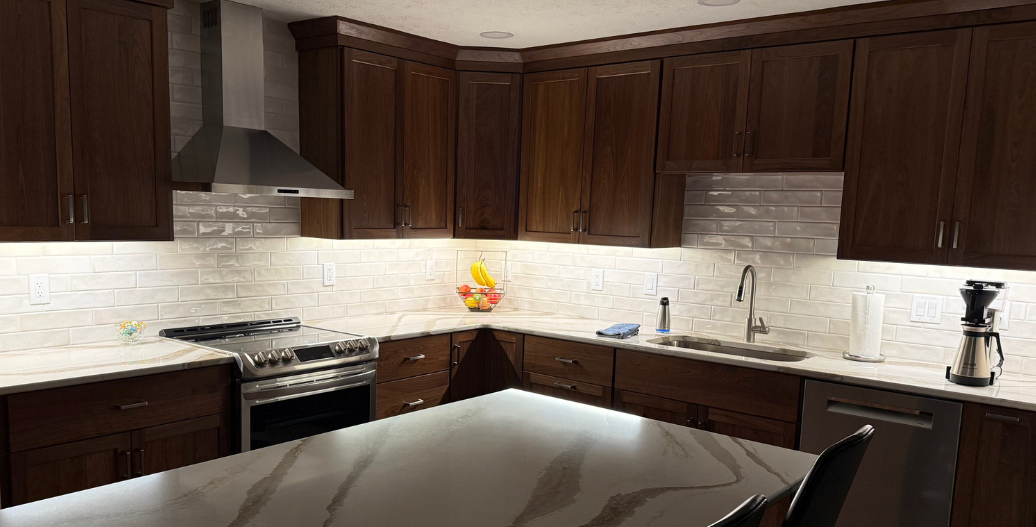
In these applications, brightness and uniformity are essential. LED strip lights used for task lighting are commonly installed under kitchen cabinets, above workbenches, along retail shelving, or around mirrors.
For example, under-cabinet lighting requires consistent output across the entire countertop. Higher-output LED strip lights provide strong illumination up to 312 lumens per foot. This level of brightness helps reduce shadows and improves visibility during food preparation.
For backlit mirrors, a COB LED strip light with a high CRI rating offers smooth, dotless light. Because these installations are often viewed at close range, visual comfort is critical. A diffused or dotless appearance ensures the lighting looks clean and professional.
When specifying an LED strip light for task applications, prioritize:
- Higher lumen output per foot
- A consistent single color temperature, typically warm white or cool white
- Reliable dimming compatibility
- Installation in an aluminum channel when visible
For pros, task lighting is often where customer expectations are highest. If a countertop is too dim, it is immediately noticeable. Selecting the right LED strip light from the start protects both your reputation and your schedule.
Accent Lighting: Elevating the Design
Accent lighting serves a different purpose. Instead of illuminating work surfaces, it highlights architectural details and adds depth to a space. The goal is enhancement, not dominance.
LED strip lights are commonly used for accent applications such as:
- Toe kick lighting
- Cove lighting
- Above-cabinet illumination
- Shelf lighting
- Stair lighting
- Shower niche lighting
- Railings
- Under-bed lighting
In these installations, output is typically lower than task lighting, often in the range of 75 to 250 lumens per foot. This softer glow creates visual interest without overpowering the room.
Shelving provides a good example. Smaller shelves may benefit from slim or dotless LED strip lights that remain discreet. Larger shelves or display areas may require higher output to properly highlight objects. Matching the color temperature to the surrounding fixtures ensures a cohesive appearance.
For professionals, accent lighting is an opportunity to showcase craftsmanship. Clean channel installation, proper alignment, and smooth dimming control make the difference between a basic install and a high-end finish.
Key elements to consider include:
- Dimming systems such as 0–10V or PWM
- Quality power supplies that deliver consistent output
- Aluminum channels with lenses for protection and heat dissipation
Accent lighting often receives the most compliments from customers because it transforms a space visually. When specified correctly, the LED strip light becomes an integral design element rather than an afterthought.
Ambient Lighting: Supporting the Whole Room
Ambient lighting provides general illumination throughout a room. While LED strip lights can contribute to ambient lighting, they are not always the primary solution. Recessed fixtures and dedicated downlights often provide higher overall lumen output per foot.
That said, certain LED strip light configurations, such as D-Series strip lights installed in pendant channels or recessed applications, can support ambient lighting plans. In commercial environments, linear runs may serve as both a functional and aesthetic feature.
For contractors, understanding when an LED strip light is appropriate for ambient use is critical. Attempting to replace all general lighting with low-output strip lighting can lead to under-lit spaces and dissatisfied customers.
Ambient lighting should feel even and comfortable. If LED strip lights are used in this role, ensure the output, spacing, and diffusion are properly calculated to achieve the desired effect.
Color-Changing LED Strip Lights: Experience and Branding
Color-changing LED strip lights introduce another layer of flexibility. RGB and RGBW options allow dynamic scenes, custom branding colors, and dramatic visual effects.
These are frequently installed in:
- Bars and restaurants
- Home theaters
- Gaming rooms
- Retail displays
- Architectural features
- Golf simulators
In these environments, lighting is part of the experience. The ability to adjust color temperature or shift to vibrant hues adds personality and impact.
When specifying color-changing LED strip lights, evaluate:
- RGB or RGBW capability
- Control systems such as wall controls, smart lighting controls, or DMX
- Compatibility with power supplies
- Proper channel installation for a clean finish
For pros, these installations require additional planning. Load calculations, controller placement, wire run lengths and power management must be addressed carefully. However, when executed correctly, color-changing LED strip lights can create memorable, high-value installations that set your work apart.
Questions to Ask Before Choosing an LED Strip Light
Before finalizing your selection, take time to define the application clearly. A few practical questions can prevent costly mistakes:
- Is the lighting intended for task, accent, or ambient use?
- How bright does the space need to be?
- Will the LED strip light be directly visible?
- Is dimming required?
- Does the project call for color-changing capability?
- How will the LED strip light be mounted and powered?
Answering these questions early helps ensure the chosen product aligns with the design intent and performance expectations.
Want to simplify the process? Our LED Strip Light Kits take the guesswork out of selecting compatible components. Choose from application-speecific options like Under Cabinet Lighting Kit, Cove Lighting Kit, Toe Kick Lighting Kit, Pergola LED Lighting Kit, and Mud In Channel Strip Light Kit.
Why This Matters for Contractors and Electricians
For professionals, proper specification goes beyond aesthetics. It impacts labor efficiency, profitability, and long-term customer relationships.
Using the correct LED strip light can:
- Reduce installation time
- Minimize troubleshooting on site
- Lower the risk of overheating issues
- Decrease callbacks
- Improve overall job quality
Customers often remember how the lighting makes them feel. If countertops are bright and functional, shelving is beautifully highlighted, and accent lighting adds depth, the result feels intentional and complete.
Professionals who consistently select the right LED strip light build trust and earn repeat business.
Final Takeaway
Choosing the right LED strip light starts with understanding the purpose of the space. Task lighting prioritizes clarity and performance. Accent lighting enhances design and highlights details. Ambient lighting supports overall comfort. Color-changing LED strip lights create atmosphere and visual impact.
When the LED strip light matches the application, the result is improved performance, longer lifespan, and a more cohesive finished space.
If you are a contractor, electrician, or lighting professional looking for expert guidance, product recommendations, and exclusive pricing, consider joining our Pro Program. Members receive access to technical support, design assistance, and special discounts designed to help you complete projects efficiently and profitably.
The right LED strip light makes a difference. The right partnership makes it even easier.


